AI Platforms Pass the Israeli Bar Exams with Flying Colors – But That’s Not the Whole Story

Maya Amir
August 10, 2026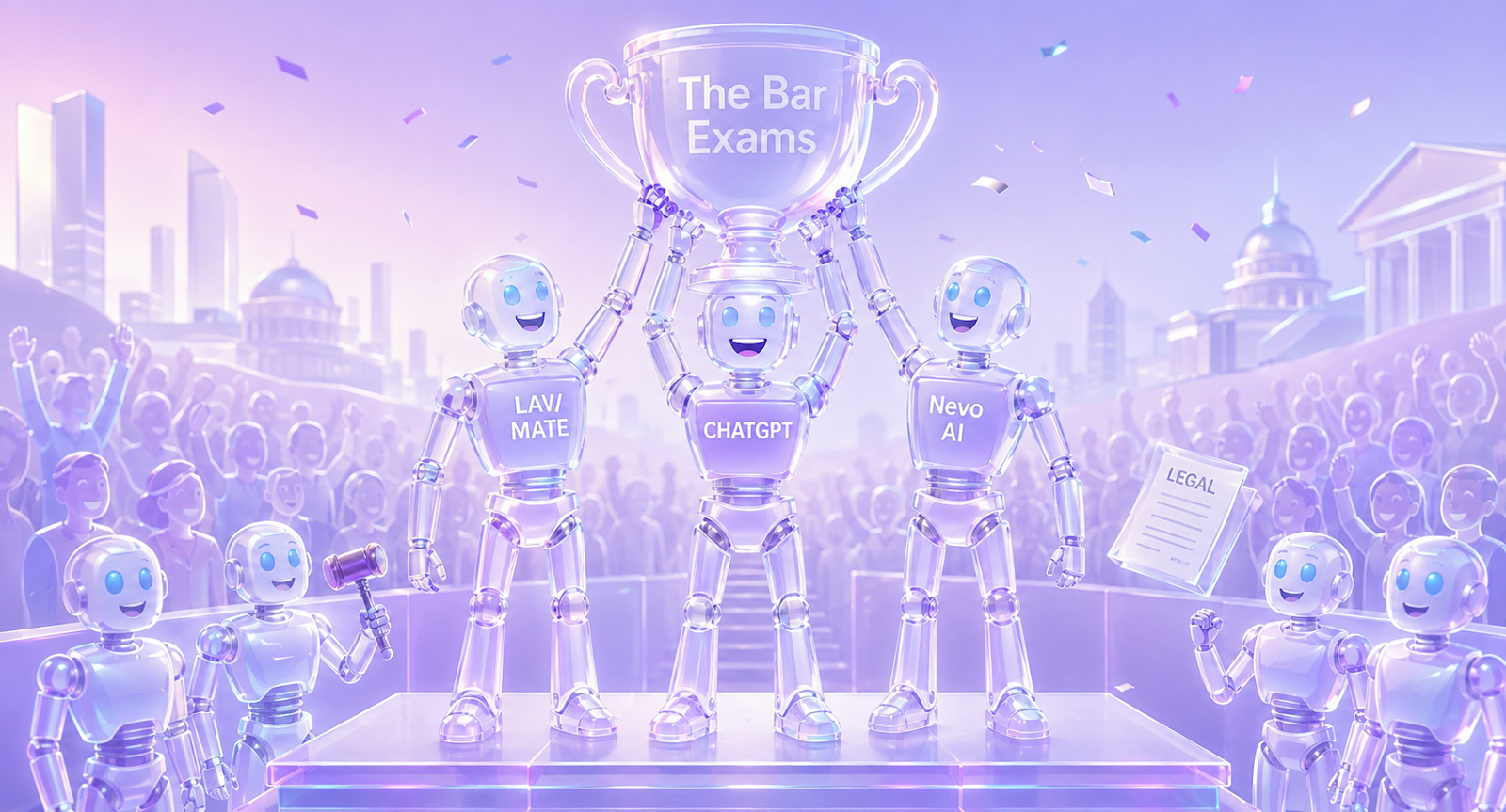
If an AI platform can answer the Israeli bar questions correctly, that is a great achievement. But in order for it to be relevant for actual legal work, the more important thing to ask is not just whether AI can get to the right answer – it is whether it can show its work, ground that answer in the right sources, and make verification fast and simple enough for the user (Full article).
Can AI platforms pass the Israeli Bar Exams?
We explored how leading AI tools perform on Israeli Bar Exam questions. The results were impressive – but they also highlighted an important distinction between answering correctly and being truly useful for legal work.
Why test AI on the Israeli Bar Exams?
We conducted this test as part of the development process for Lizzy AI's new legal database feature, with the goal of evaluating different tools ahead of launch. We also saw it as an opportunity to contribute to the broader professional and academic discussion about the impact of AI on the legal world.
Israeli Bar Exam multiple-choice questions are a strong test case for several reasons. They require logical reasoning, accurate identification of the relevant law, integration across legal topics, application of legal rules to facts, attention to exceptions and edge cases, and selection of the best answer from four options, which requires a high degree of precision. In that sense, the Bar Exams offer a useful way to assess the reasoning and research-related capabilities of AI tools.
The results were strong across the board
The findings show a high level of performance. In this test, all of the tools achieved satisfactory results, and most reached particularly high success rates. In the most recent Israeli Bar Exam session, held in June 2026, ChatGPT, LawMate and Nevo AI each achieved scores of over 90%.

Correct answers alone are not enough
The results challenge a common assumption that a tool's ability to produce correct legal answers necessarily comes from having a broad internal legal database. At the same time, the ability to answer correctly is not enough to make a tool practically useful for legal work. In legal practice, the quality of the reasoning, the reliability of the sources, and the user's ability to verify the legal basis of the answer are all critical.
ChatGPT, like other large language models, can provide sources when asked, but it does not perform quality control on those sources. In some cases, it may rely on materials that are not considered appropriate for legal research or legal advice, such as blogs or private online publications, rather than case law, legislation, or legal scholarship. In addition, ChatGPT typically provides only a general reference, rather than a precise citation within the full source context, making verification slow and complicated for the user.
What the ideal legal AI tool should do
The ideal legal AI tool is not just one that gives the right legal answer, or has the broadest legal data base. It is one that balances a legal database with a high-quality search agent, with the ability to conduct in-depth analysis and online research, and with the ability to give users a fast, efficient way to verify the legal source behind the answer. This is exactly what Lizzy aims to provide through its new legal database feature – stay tuned!